Weekly injection
Once a week, under the skin
All-inclusive$139 /mo
Get started
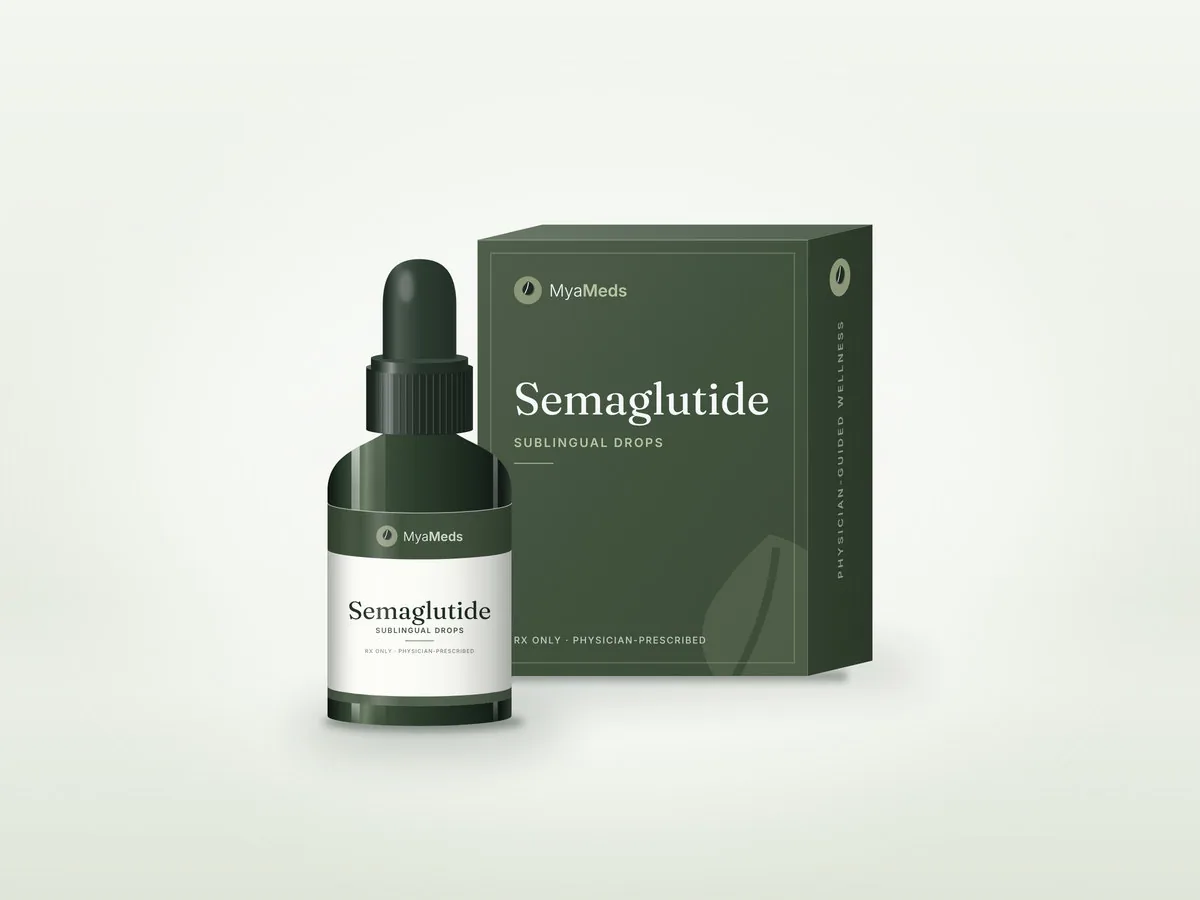
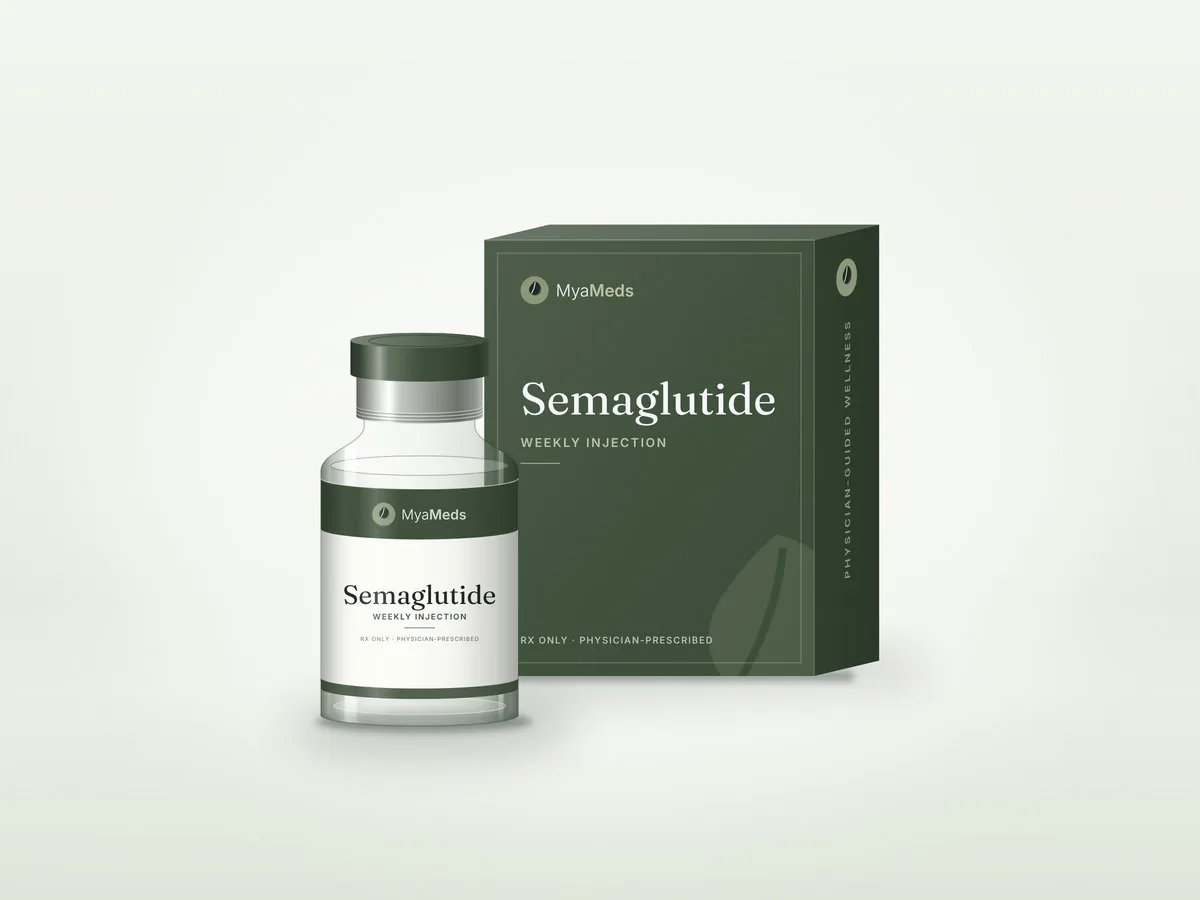
Image for display only. Product may arrive in generic pharmacy packaging.
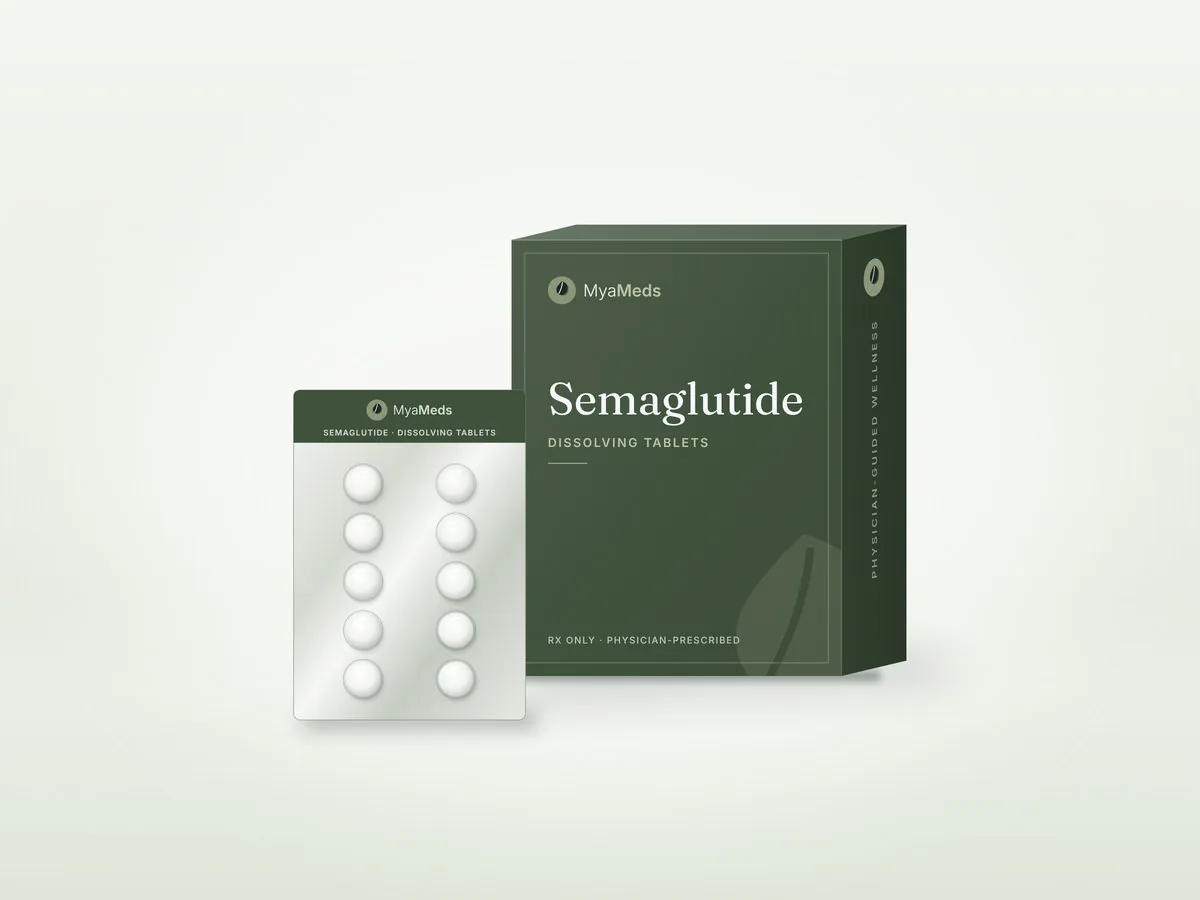
Semaglutide is a GLP-1 medicine that helps you feel full sooner and eat less. At MyaMeds it comes three ways: a weekly injection, drops under the tongue, or a tablet that dissolves in your mouth. A physician from our group reviews your health history and meets you by video before anything is prescribed.
Free consultation. HSA and FSA accepted. Prescription required. Compounded, not FDA-approved.
Medically reviewed by our physician group on November 26, 2026.
Image for display only. Product may arrive in generic pharmacy packaging.
Semaglutide acts like GLP-1, a hormone your gut releases after you eat. It signals fullness to your brain, slows how fast your stomach empties and helps your body release insulin when blood sugar rises. It’s used alongside a reduced-calorie diet and more physical activity, not instead of them.
The weekly injection is the form with the most research behind it. There is far less research on semaglutide drops and dissolving tablets, and how much of the medicine the body absorbs from them is less certain. Our doctors can talk through the trade-offs with you. These are compounded products, and they are not the FDA-approved semaglutide tablets.
Our doctors decide case by case. Semaglutide is generally considered for adults with obesity (a BMI of 30 or more), or with overweight (a BMI of 27 or more) and at least one weight-related condition such as high blood pressure, type 2 diabetes or high cholesterol.
It isn’t right for everyone. Tell our doctors if you:
The weekly injection is $139 a month, sublingual drops are $169 and the dissolving tablet is $199. Each price covers your consultations, check-ins, medication and delivery, and stays the same at every dose. There are no membership fees or contracts, and you can stop any month. You can pay with an HSA or FSA card, or a credit card. Some employers offer MyaMeds as a benefit at a lower group price.
The injection goes under the skin of the stomach, thigh or upper arm once a week, on the same day each week. Our doctors start you on a low dose and raise it gradually, usually every four weeks, so your body can adjust and stomach side effects stay manageable. Your dose depends on how you respond and how well you tolerate it.
The most common side effects are stomach-related: nausea, diarrhea, vomiting, constipation, stomach pain, indigestion, bloating, burping, gas and heartburn. Some people also have headache, tiredness, dizziness, a stomach bug or hair loss, and people with type 2 diabetes can have low blood sugar. Stomach side effects are most common when you start semaglutide or raise the dose.
Less common but serious risks include pancreatitis; gallbladder problems; low blood sugar, especially with insulin or a sulfonylurea; dehydration that can lead to kidney problems; severe stomach side effects; serious allergic reactions; complications of diabetic eye disease; a faster heart rate; and breathing stomach contents into the lungs during anesthesia or deep sedation. In studies in rodents, semaglutide caused thyroid C-cell tumors. It isn’t known whether it causes these tumors in people.
Get medical help right away for severe stomach pain that won’t go away, with or without vomiting; signs of a serious allergic reaction; or a lump or swelling in your neck, trouble swallowing, hoarseness or shortness of breath.
Pregnancy: stop semaglutide and tell our doctors if you become pregnant, and stop at least 2 months before a planned pregnancy.
More on safety, including the FDA’s guidance on compounded GLP-1’s, is in our Learning Center.
The semaglutide our doctors prescribe is compounded: a state-licensed 503A pharmacy prepares it for you, from your prescription. Compounded medications are not FDA-approved, and the FDA does not review them for safety, effectiveness or quality. FDA-approved semaglutide products exist, and the clinical trials behind them tested those products, not compounded versions. A licensed physician decides whether treatment is right for you.
$139 a month as a weekly injection, $169 as sublingual drops or $199 as a dissolving tablet, with consultations, check-ins, medication and delivery included. Each price is the same at every dose. You can pay with an HSA or FSA card, or a credit card.
The weekly injection has the most research behind it and the lowest price. Drops and dissolving tablets avoid needles, but there’s less research on them. Our doctors will help you choose.
No. A state-licensed pharmacy prepares it for you, and the FDA does not review compounded medications for safety, effectiveness or quality.
No. Ozempic and Wegovy are FDA-approved semaglutide products. The semaglutide our doctors prescribe is compounded for you by a state-licensed pharmacy and is not FDA-approved.
No. The Wegovy pill is an FDA-approved semaglutide tablet that is swallowed whole. Our dissolving tablet is compounded for you, dissolves in your mouth and is not FDA-approved.
Both are weekly GLP-1 medicines, and tirzepatide also acts on GIP. Our doctors weigh your health history, your goals, how you’ve done on other medicines and your budget, then recommend one.
Everyone responds differently. Doses start low and rise over several months, and our doctors track your progress at each check-in and adjust your plan.
We let you know promptly and refund your payment.
Your consultation is free, and our doctors decide whether a prescription fits.
Medically reviewed by our physician group on November 26, 2026.
Compounded medications are not FDA-approved, and the FDA does not review them for safety, effectiveness or quality. A licensed provider decides whether treatment is appropriate for you.